🚐 Driving in Portugal with a Motorhome: Tolls, Tips & Road Rules
Finding Your Rhythm on the Road
Driving in Portugal with a motorhome can feel a bit overwhelming at first — especially when it comes to toll roads, signage, and local road habits. But once you find your rhythm, it’s one of the most rewarding countries to explore on wheels.
If you’re heading to Portugal, you’re in for a treat — beautiful coastlines, sunshine, laid-back vibes… and then there are the toll roads, which can throw off your rhythm just a bit at first. But driving in Portugal gets easier the more you do it.
But once you get the hang of it, driving in Portugal really lets you settle into your own pace — the beat of travel life. Whether you’re cruising along wide open autoestradas or winding through sleepy inland towns, it’s all part of the journey.
If you’re thinking about driving in Portugal with a motorhome, there’s a lot to love — sunshine, stunning coastlines, friendly people. But then you hit the toll roads and think… “Hang on, what’s going on here?”
Yep, we’ve been there.
Driving in Portugal is mostly a breeze, but the toll system is a bit of a head-scratcher if you’re not used to it — especially in a motorhome. We took our time finding our beat here, and like any good road trip soundtrack, there were a few unexpected changes in tempo.
🛣️ Getting Used to the Roads
Let’s start with the roads themselves. In general, Portugal’s main roads and autoestradas (motorways) are in great condition. They’re smooth, quiet, and really handy for covering long distances without too much hassle.
When driving in Portugal, once you get off the main roads though — especially into the hills or countryside — things can get a bit more “hold onto your cupboards”. Think narrow lanes, potholes, and the occasional moment of “are we going to fit through that?” in our big American RV, Betty.
So our top tip? Trust your gut. If it looks sketchy, don’t chance it. We’ve turned around more than once.
💡 Driving Etiquette in Portugal: What to Know
Portuguese drivers have a bit of a reputation — and we can confirm, they’re not always the most patient bunch.
- Tailgating is common, especially on faster roads. Don’t let it stress you — just keep your cool and let them pass when it’s safe.
- Flashing headlights usually means they want you to give way (opposite to the UK, where it’s often a friendly “after you”).
- Horns should not be used at night unless it’s an emergency.
- On-the-spot fines are a thing — and they’ll likely expect cash in euros only. So it’s worth keeping some cash in the glove box just in case.
The best advice for driving in Portugal? Stick to your pace, keep your wits about you, and don’t let anyone push you out of your rhythm. You’re driving your home, not a race car.
💶 Toll Roads in Portugal: What You Need to Know
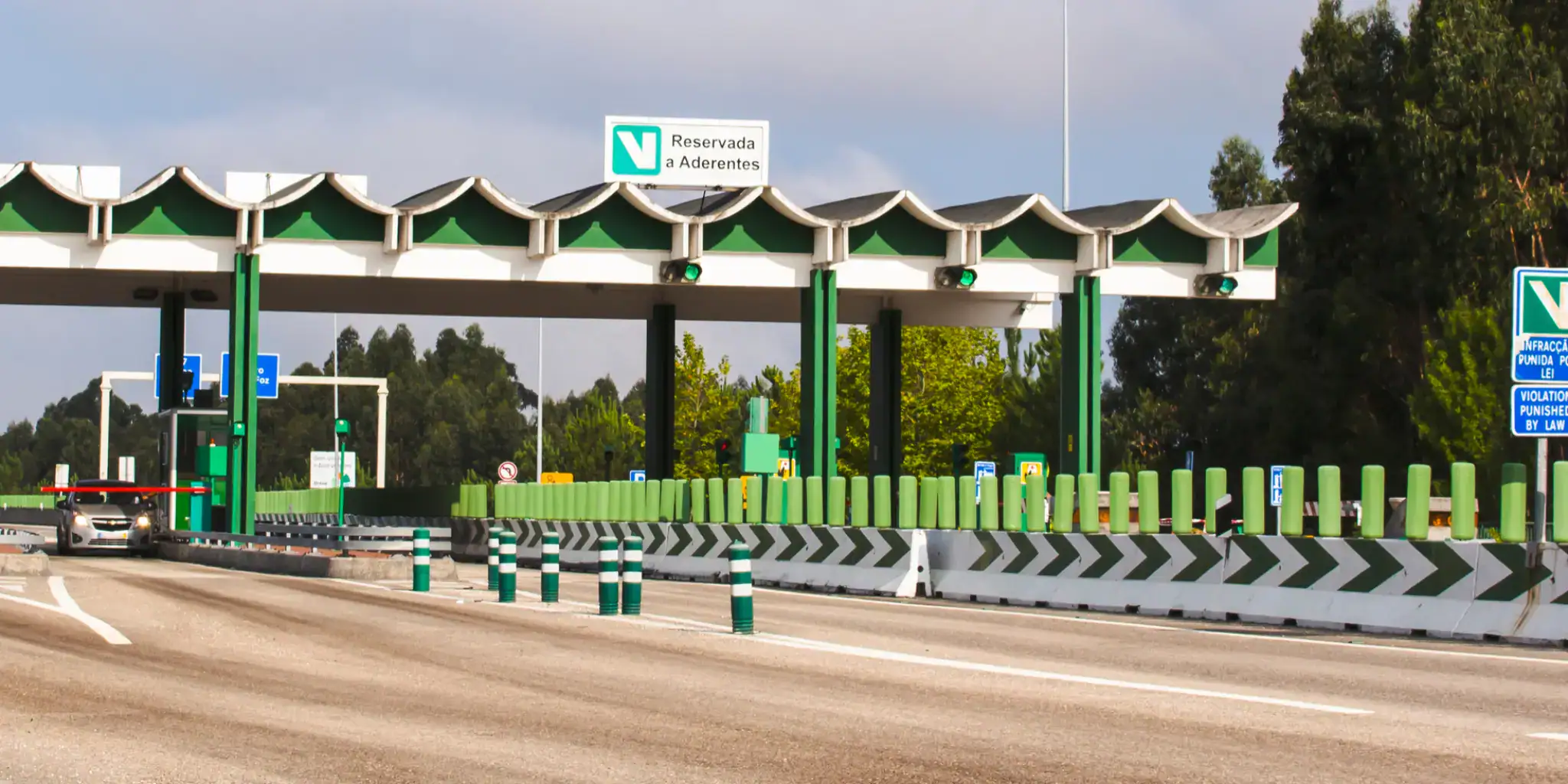
Portugal’s toll roads can be a bit confusing at first — especially if you’re used to the traditional ticket booths you find in other countries. Here, there’s a mix of manual tolls and fully electronic toll roads (with no barriers or booths at all). If you’re driving in Portugal in a motorhome or campervan, it’s really important to know the difference — not just for your route planning, but to avoid unexpected fines down the line.
🚧 Types of Toll Roads
There are two main types of toll systems in Portugal:
1. Traditional Tolls (With Booths)
You’ll see these on major motorways (like the A1 or A2). They work just like you’d expect — you take a ticket when you enter and pay when you exit. You can usually pay by cash or card, and the process is pretty straightforward.
2. Electronic Toll Roads (No Booths, No Barriers)
These are a bit trickier. They’re monitored by overhead cameras and sensors that automatically scan your number plate as you drive under them. There’s no option to stop or pay on the spot — you need to be registered in advance or you risk getting fined.
These electronic-only tolls are most common in the north and central parts of Portugal (like the A22 in the Algarve, or the A28 near Porto).
💳 How to Pay for Electronic Tolls
There are a few options, but here’s a breakdown of what works best for motorhomers and vanlifers:
✅ Easytoll (What we used — and recommend)
- You register your number plate and link it to your debit or credit card.
- You can do this online or at a physical Easytoll Welcome Point (usually at the border).
- The toll cameras scan your plate, and the charges come straight off your card.
- It’s valid for 30 days and can be renewed.
🟡 TollCard
- You buy a prepaid card (available online or at post offices and petrol stations).
- You activate it via SMS with your registration number.
- It’s handy if you prefer not to link your card, but it’s a bit more fiddly.
🔵 TollService
- Good for short trips — you pay a flat rate for 3 days of unlimited travel on select routes.
- Not ideal for full-time travellers, but fine for a quick visit.
🟢 Via Verde
- This is a little electronic box that goes on your windscreen.
- It automatically deducts toll charges from your account and works across all types of tolls.
- Best suited for long-term travellers or Portuguese residents, but some rental companies offer it too.
🚐 Which Toll Class Is My Motorhome?
Toll prices depend on the class of your vehicle:
- Class 1 – Cars and smaller campervans (under 1.1m at front axle height).
- Class 2 – Most motorhomes fall into this, especially larger vehicles or those towing.
- Class 3 and 4 – For heavier or multi-axle vehicles (trucks and trailers).
If you’re in a large motorhome like us (Betty), expect Class 2 charges. The cameras make that call automatically, so there’s no cheating the system!
❗ What Happens If You Don’t Pay?
This is where it gets sticky — unpaid tolls can lead to fines, and they often don’t show up straight away. In some cases, they’ve turned up months later, passed on through hire companies or mailed to international addresses.
If you’re not registered with Easytoll or another valid payment system and drive through an electronic toll, there’s no way to pay afterwards — so you either set it up properly in advance or risk a fine.
🗺️ Planning Your Route
When driving in Portugal, you can avoid most tolls by sticking to national roads (EN roads) — they’re free, scenic, and often more interesting. Just be prepared for slower speeds and the occasional bumpy stretch!
We like to mix it up — toll roads when we need to get somewhere, and back roads when we’ve got time to take it slow and stay in our rhythm.
You can check routes ahead of time using:
- Google Maps – tick “Avoid tolls” under route options
- ViaMichelin – shows toll costs and alternatives
- park4night – to check stops and reviews along the way

🧭 Final Thoughts
Driving in Portugal with a motorhome doesn’t need to be stressful. Learn the toll rules, register for Easytoll, and drive your own pace.
Some days it’s toll roads and quick progress; other days, it’s winding lanes and olive groves. Either way — you’ll love the journey.
For us, it’s all about finding our own beat — some days that means paying a toll to make progress, other days it means ditching the motorways for a slow roll through olive groves and hilltop villages.
Either way, Portugal has plenty to offer — as long as you know what you’re driving into.
🚐 Portugal motorhome driving tips
Don’t get caught out by confusing tolls, tailgating drivers, or last-minute fines.
We’ve put together a free, no-fluff guide to driving and toll roads in Portugal — perfect for motorhomers, vanlifers, and first-timers.
👉 Download the guide here
👉 Or head to our Resource Hub for more free tips, checklists & travel tools!
Travel to the beat of your own adventure — and go in feeling prepared.